Vinyl Fencing Installation in Los Angeles and the San Fernando Valley
Every vinyl fence starts with your HOA spec, not a catalog: profile, color, wall thickness and post spacing checked before we quote a single panel.
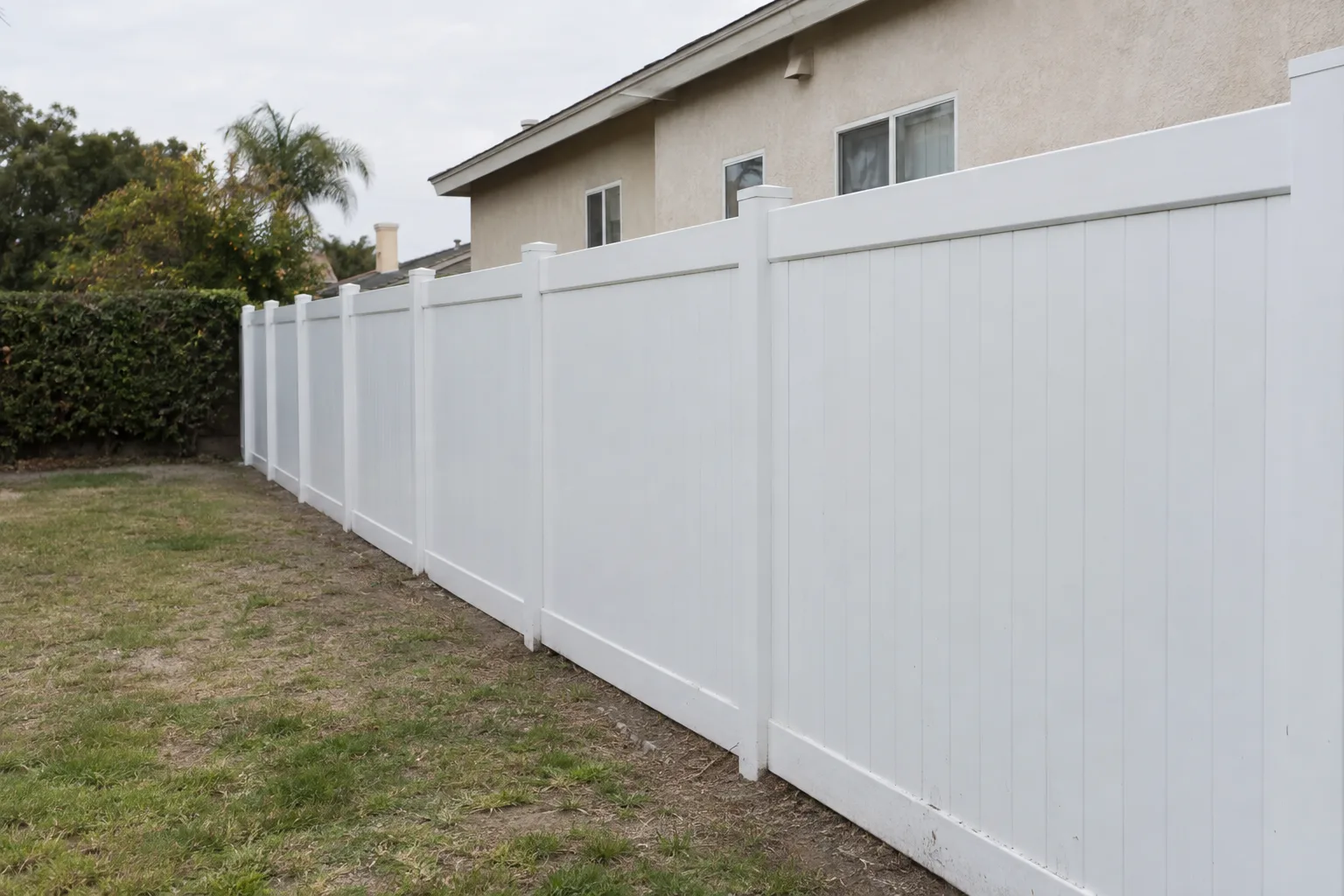
Vinyl fencing that matches what your HOA already approved
Vinyl fencing is the go-to choice when an HOA has already decided the material for you.
PVC fence panels, pre-formed fence sections made from polyvinyl chloride, come in privacy, semi-privacy and picket configurations. They are low-maintenance, clean-looking and durable under Southern California's heat. Iron Man Gates & Fencing installs vinyl fencing across Los Angeles and the San Fernando Valley, building every project around your HOA material specification, the document your association uses to define approved colors, heights and styles.
We don't recommend a product and then hope it clears review. The approval process shapes the scope before a single post goes in the ground.
Encino-based, deep in Valley HOA territory
Vinyl fence demand in the San Fernando Valley is largely HOA-driven, and that is exactly where we work.
Our office is at 17200 Ventura Blvd in Encino. That puts us a short drive from Woodland Hills, West Hills, Winnetka and Canoga Park, four of the most HOA-dense communities in the Valley. Planned developments throughout these neighborhoods specify vinyl by name. They define the color. They set the height limit. Some list approved manufacturers.
Here is what most homeowners don't realize about vinyl fencing in these communities: the spec document often calls out wall thickness, not just style. A thin-wall panel that looks identical to a thick-wall one at purchase can fail HOA review if the community's CC&Rs reference a grade standard. We have read enough of those documents to know what to look for before we write the scope.
Encino's proximity to these neighborhoods means we are familiar with their approval timelines and review boards. That matters for your installation schedule. Understanding fence permit requirements across Los Angeles cities is part of what we bring to every CC&R review before the project begins.
What a vinyl fence consultation actually looks like in the field
Every vinyl installation starts with a compliance review, not a catalog.
Here is how a recent Woodland Hills project came together.
A homeowner reached out after getting a compliance notice. Her neighbor had installed a wood privacy fence in a style the HOA rejected. Now she was upgrading and wanted to do it right the first time.
When we walked the property, the first step was reading the CC&R language she had emailed over. Her community required white vinyl, a board-spacing configuration (the arrangement of vertical fence boards) with no visible gaps, a maximum height of six feet, and posts set no more than eight feet apart on center. That last detail matters structurally, not just for looks.
We matched a privacy profile with UV stabilizer additive, a compound blended into the vinyl during manufacturing to resist color degradation in prolonged sun. The San Fernando Valley regularly hits 100°F or above in summer. A panel without that additive yellows fast. Hers won't.
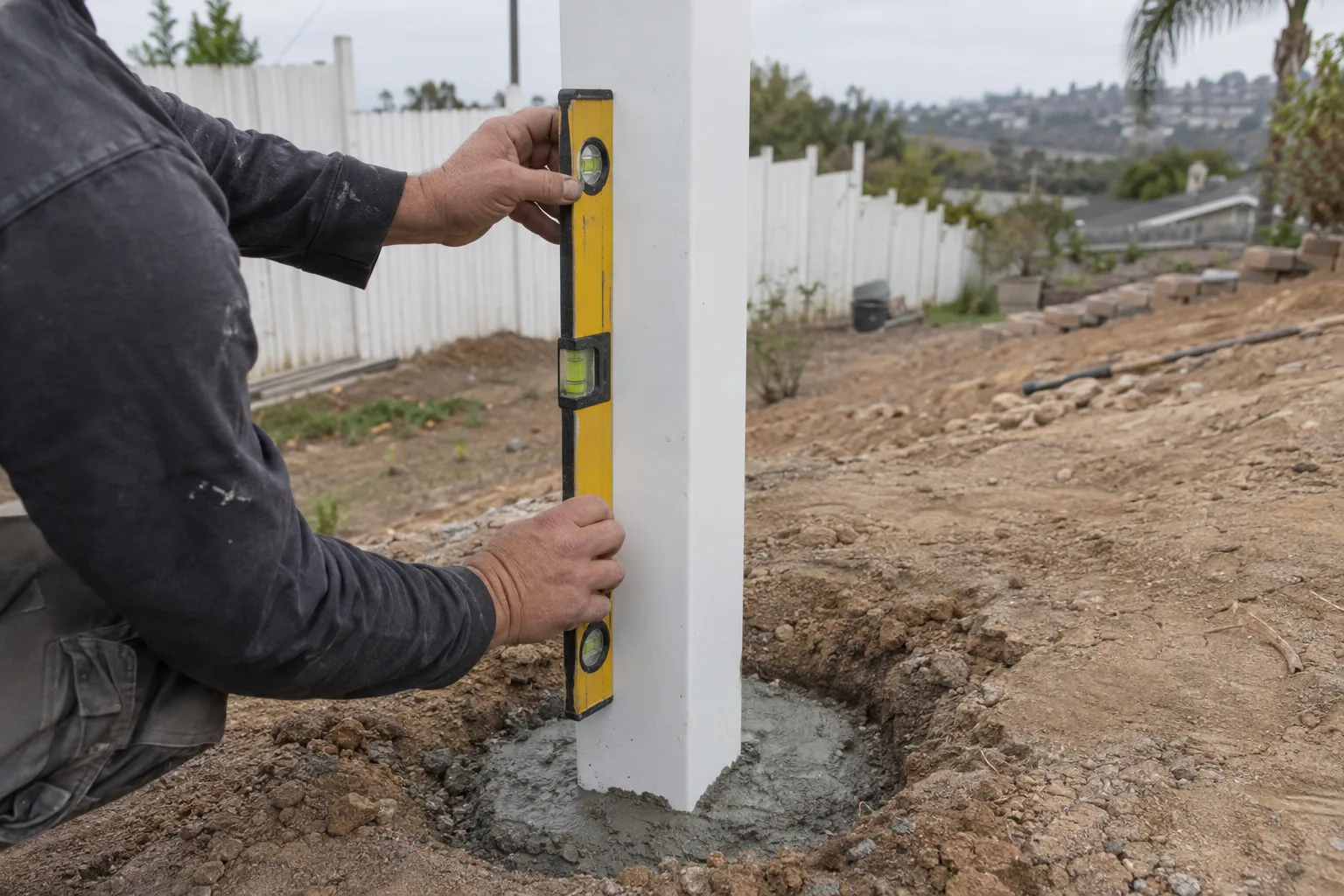
The concrete footing collar (the concrete poured around each post below grade) went down at 36 inches. That is deeper than some installs, but her yard had a slight grade change on the back run, and shallow footings shift when soil settles unevenly. We wanted the fence line straight in five years, not just at installation.
The HOA approved the project on the first submission. She didn't get a second compliance notice.
Choosing the right vinyl grade for your property
Vinyl fence grade rating measures wall thickness, and it directly affects how the fence handles heat.
A lot of buyers assume all white vinyl fence looks the same, so it performs the same. That is not how the material works. Vinyl fence grade rating is a classification based on wall thickness and structural density. Thicker walls resist thermal expansion, warping and lateral impact better, especially in high-UV environments.
In the San Fernando Valley, summer heat doesn't just fade color. It stresses the profile over years. A thin-wall panel that works fine in a moderate climate can develop a slight bow on a south-facing fence run in Encino by midsummer.
We select grade based on three factors: HOA spec requirements if any exist, sun exposure on the fence run, and post-span distance. Longer spans between posts put more flex stress on the mid-panel. Thicker-wall profiles handle that load better.
The post-and-rail system, the structural backbone of any vinyl fence, where posts set in concrete footings hold horizontal rails that lock panels in place, is the part most homeowners never see and rarely think about. It is the difference between a fence that is straight in ten years and one that lists by year three.
Our standards for every vinyl fence installation
Every vinyl fence we build meets a consistent structural and compliance standard. No shortcuts on footings or grade.
HOA spec review first
We read your CC&R or architectural guidelines before recommending any product.
UV-stabilized vinyl profiles only
Every panel we install carries a UV stabilizer additive rated for Southern California's sun exposure.
Concrete footing collars at proper depth
Post depth is calculated based on fence height, post spacing and local soil conditions, not a one-size number.
Grade-matched panels
We match vinyl fence grade rating to fence height, post span and sun exposure on each specific run.
Board-spacing configuration confirmed before order
Privacy, semi-privacy or picket configuration is confirmed in writing against HOA spec or owner preference before we place the material order.
Post-and-rail alignment checked at every bay
Rails are checked for level and plumb before panels lock in. Alignment issues caught early don't become expensive corrections later.
Send us your HOA spec and property line, and we will build the scope around it.
How a vinyl fence installation comes together
Every project follows a consistent sequence: site assessment, material confirmation, structural installation, final inspection.
- 1
Site assessment and grade mapping
We start with a physical walkthrough of the property line. We check for grade changes, existing posts or foundations that need removal, utility marking requirements, and neighboring property considerations. If an HOA is involved, we review the spec document before this visit so we arrive with the right questions. Post spacing is mapped during this phase, since irregular lot lines sometimes require adjusted spans.
- 2
Material selection and HOA confirmation
Once the site assessment is complete, we confirm the vinyl profile, color and grade against your HOA material specification if applicable, and specify the UV stabilizer additive grade, wall thickness and post-cap style. If your HOA requires a pre-approval submission, we can provide documentation outlining the selected materials and installation specs. Vinyl with a co-extrusion color layer, color built into the vinyl itself rather than applied as a coating, holds color far longer than budget panels that use surface pigment.
- 3
Installation and final inspection
Posts are set in concrete footing collars at the calculated depth. We allow full cure time before locking rails. Panels are set bay by bay, with level checks at each stage. Caps and post caps are secured with appropriate fasteners, not left friction-fit, which backs out over time. Final walkthrough covers fence line straightness, panel alignment, gate hardware if applicable, and HOA compliance against the approved spec.
Vinyl is also one of the most commonly specified materials for California-compliant pool fence installation in HOA communities, where both safety codes and architectural guidelines must be satisfied simultaneously.
Neighborhoods we serve
Iron Man Gates & Fencing installs vinyl fencing across the San Fernando Valley, Greater Los Angeles and beyond.
We serve Encino, Sherman Oaks, Woodland Hills, West Hills, Winnetka, Canoga Park, Tarzana, Van Nuys, Reseda, Northridge, Granada Hills, Chatsworth, Studio City, Burbank and Glendale, and throughout Greater Los Angeles. We also install vinyl fencing in Santa Monica, Culver City, Pasadena, Calabasas and Thousand Oaks. Call to confirm service in your area. If your HOA doesn't require vinyl specifically, we also offer wrought iron and ornamental fencing options that may meet your community's architectural standards.
Does vinyl fencing actually hold up in San Fernando Valley heat, or does it warp and yellow over time?
UV-stabilized vinyl holds up well in Valley heat when the correct grade is specified. Panels manufactured with a UV stabilizer additive resist color degradation and thermal warping. Budget panels using surface pigment rather than co-extruded color fade faster. We specify grade based on sun exposure, post span and fence height, not just what's available in the catalog.
What does vinyl fence installation cost in the Los Angeles area?
Pricing varies based on linear footage, vinyl grade, post depth requirements and HOA material spec compliance. Call 818-399-8524 for a site-based quote specific to your property.
Will you handle the HOA approval documentation, or is that my responsibility?
We prepare the material documentation your HOA needs for pre-approval submission. That includes the vinyl profile spec, color confirmation, wall thickness and post spacing plan. Most HOA rejections happen because homeowners submit incomplete paperwork. We've read enough CC&Rs to know what review boards look for before we write the first page.
How long does vinyl fence installation take once materials are confirmed?
Most residential vinyl fence projects complete in one to two days of on-site work. Post setting happens first, and concrete footing collars require full cure before rails and panels lock in. HOA pre-approval adds lead time before installation begins, and timing depends on your association's review cycle.
My last fence started leaning after a few years. What's different about how you set posts?
Post depth is calculated per project, not from a fixed number. We account for fence height, post spacing, grade changes and soil conditions on each specific run. Concrete footing collars go down at the depth required for structural stability, not the minimum. Shallow or under-filled footings are the primary cause of premature fence lean.
Can you install a vinyl gate at the same time as the fence, or is that a separate project?
Vinyl pedestrian and driveway gates install during the same project as the fence. Gate post footings are sized heavier than field posts to handle swing load. Hardware, hinges, self-latching mechanisms and stops, is specified before the material order so everything arrives together and no second visit is needed.
Related fencing services
Get a vinyl fence scope built around your spec
Vinyl fencing done right starts with reading your HOA spec, and we do that before anything else.
Iron Man Gates & Fencing is based in Encino and serves the full San Fernando Valley and Greater Los Angeles. Learn more about how our Encino-based team approaches each project, from the initial site walkthrough through final HOA sign-off.
If you are in an HOA-governed community, we will build the scope around what is already approved. If you are not, we will help you choose the right grade and profile for your lot and climate. Call us at 818-399-8524 to schedule a site walkthrough.